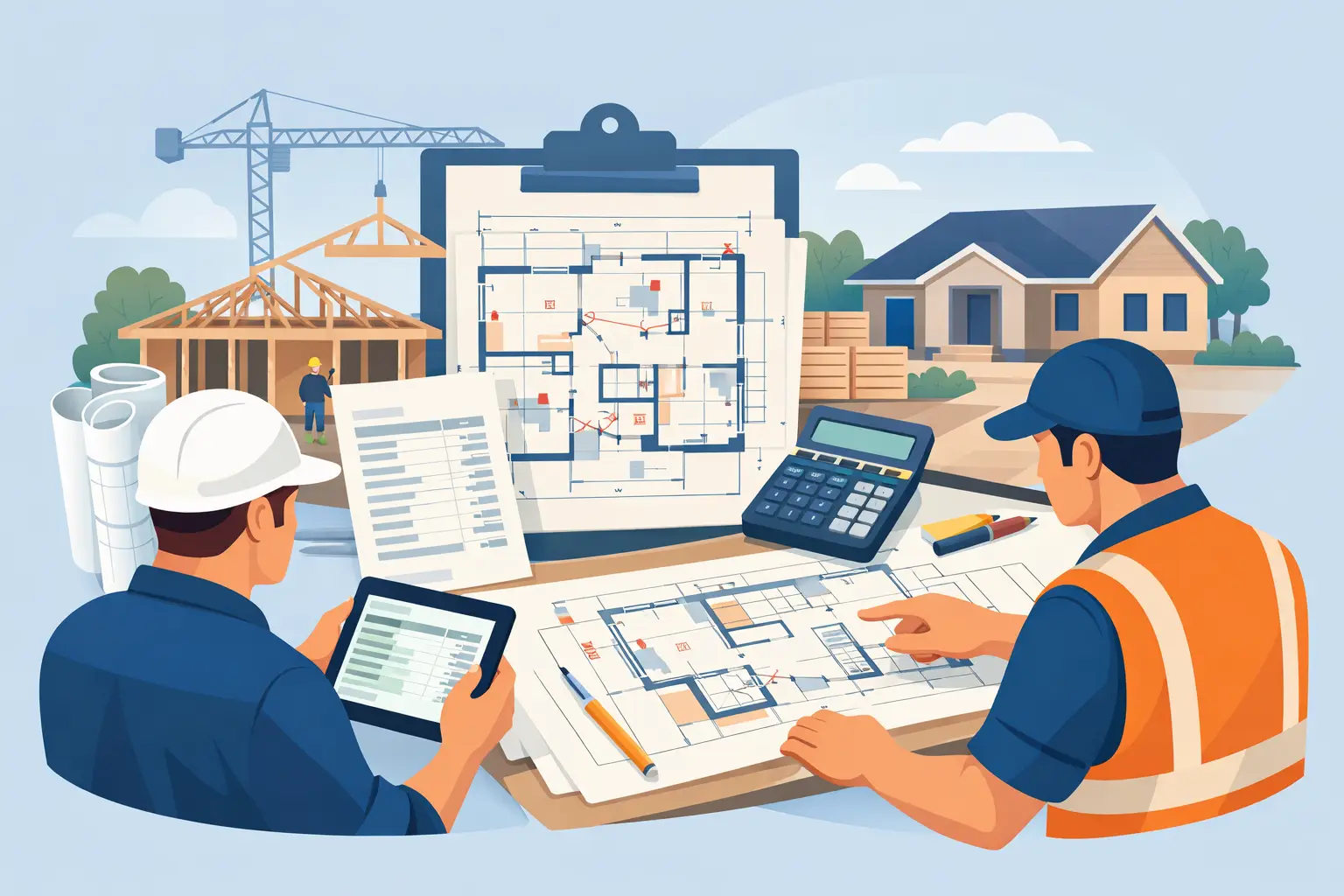
A fast construction estimating service only matters if the estimate is usable when it lands. Most builders are not short on numbers. They are short on time to measure plans properly, chase trade input, structure a BOQ, and still get a tender out without carrying avoidable risk. Speed helps, but only when it comes with measured scope, clear allowances, and outputs you can actually price from.
For residential builders working through DA-stage opportunities, the pressure point is usually not whether a project can be estimated. It is whether it can be estimated early enough, clearly enough, and cheaply enough to support a commercial decision. If the estimate arrives three days late, or it is built on broad square metre assumptions, the damage is already done. You have either lost time on a job you should have screened out, or priced a job with gaps buried in preliminaries and provisional sums.
What a fast construction estimating service should actually deliver
A proper fast construction estimating service is not just a takeoff with a lump sum at the bottom. For a builder, the useful version is one that separates measured quantities from allowances, organises trade scope in a practical BOQ structure, and gives enough detail to support subcontractor enquiries and internal review.
That means the estimate needs to start from plans and supporting documentation, not from a generic rate benchmark. Wall areas, floor finishes, structural elements, external works, wet areas, joinery scope and service allowances all need to be treated with the right level of detail for the project stage. DA plans are never perfect, so the estimate also needs assumptions that are visible rather than hidden.
This is where many quick estimating options fall over. Some are fast because they stay high level. Others are detailed, but only after a manual process that takes days and costs too much to use early in pre-construction. Builders need both - speed and a structure that stands up when the job moves closer to tender.
Why builders use a fast construction estimating service early
The biggest value in a fast turnaround is not convenience. It is decision speed.
If you are looking at a granny flat, a single dwelling, a duplex or a triplex, early costing tells you whether the opportunity is worth pursuing, where the cost pressure sits, and which parts of the design need attention before you start burning estimating hours internally. On larger custom homes and additions, it helps identify whether the brief is commercially aligned before the client expects a polished fixed number.
For builders in NSW, QLD and VIC, this becomes more important when regional and metro pricing diverge. Rate-card differences in labour, freight, plant and subcontractor availability can move a job quickly. A builder comparing a regional duplex against a metro custom home does not need a generic national average. They need a cost position that reflects where the project will actually be built and where provisional risk is likely to sit.
The practical benefit is straightforward. You get a read on feasibility, a framework for value engineering, and a cleaner path into tender pricing. That reduces the chance of absorbing scope gaps later through margin erosion.
The difference between speed and rushed pricing
Fast and rushed are not the same thing.
Rushed pricing usually shows up as incomplete scope, messy allowances, or a BOQ that no one on site or in the office wants to touch again. It might be enough to get a number out, but it creates downstream rework. Estimators have to rebuild the package, project managers cannot trust the trade breakdown, and subcontractors come back with qualifications because the scope issue was pushed onto them.
A useful estimating workflow moves quickly because the process is efficient, not because detail has been skipped. Plans are measured directly. Rate cards are applied consistently. Provisional allowances are flagged where documentation is incomplete. Programme logic is included so the buildability and sequencing discussion starts early, not after contract issue.
That distinction matters if you are trying to win work without taking silly tender positions. A quick number that cannot be defended is not efficient. It is expensive in a different place.
What builders should expect in the output
The best estimating outputs are the ones your team can keep using.
A builder-ready cost estimate report should give a clear total, logical trade breakdowns, assumptions, exclusions and identified risk areas. An editable BOQ workbook matters because no estimate survives first contact with market feedback. Rates move. Supplier quotes come in light or heavy. Client scope changes. If the estimate cannot be adjusted without rebuilding it, it has limited value.
Subcontractor pricing packs are another practical piece that often gets missed. A tidy trade package saves time when sending enquiries and improves quote quality because the scope has already been organised. That is especially useful when your internal team is lean and your estimators are balancing live tenders with feasibility work.
An interactive dashboard also has real use when it lets you test changes to rates, quantities, margin and supervision settings. Builders do not need flashy visuals. They need to see what happens to the job total when framing rates move, tile areas increase, or site costs stretch due to programme length.
Finally, an indicative construction programme gives the estimate more commercial meaning. Time is cost. If the programme assumptions are unrealistic, labour and preliminaries usually follow them off a cliff.
Where a fast construction estimating service fits in the workflow
For most residential builders, this type of service sits between initial plan review and formal tender issue.
At DA stage, the job is usually too early for full market-tested pricing but too serious for hand-waving cost advice. That is the gap. A quick estimating pack lets the business decide whether to proceed, what to query with the designer, and which trades or materials need closer checking before money is committed to a deeper tender process.
It also helps when comparing against a past priced job. Similar project type does not mean similar cost outcome. Site slope, facade complexity, wet area count, glazing intensity, external works and service conditions can all shift the number. A measured estimate shows where the difference comes from instead of pretending every 220 square metre dwelling behaves the same.
For businesses without a large internal estimating team, the service effectively expands capacity. For businesses that do have estimators, it can remove repetitive measurement work so internal staff focus on trade strategy, adjudication and risk review.
What to check before you rely on one
Not every fast estimating offer is built for builders. Some produce a headline cost only. Some rely too heavily on template assemblies. Some do not distinguish clearly between measured scope and provisional allowances, which makes the estimate look tighter than it really is.
Before relying on any service, check whether quantities are measured from the provided plans, whether rate logic reflects Australian residential construction conditions, and whether the outputs are editable. Also look at how assumptions are handled. If the drawings are incomplete, the estimate should say so plainly. Hidden assumptions are where tender risk starts.
You should also check whether the BOQ structure matches how builders actually buy work. If the estimate is technically detailed but commercially awkward, your team will end up reformatting it before subcontractor pricing even begins.
A service starting from $299 can make strong commercial sense if it replaces hours of internal effort and helps your team make better early calls. The key question is not the fee by itself. It is whether the output reduces rework and protects margin later.
Why this matters more in the current market
Residential builders are carrying enough pressure already. Labour remains uneven, selected material packages still move around, and clients expect faster answers earlier in the design process. At the same time, margin for estimating mistakes has not improved.
That is why speed in pre-construction has become more than an admin benefit. It is part of risk control. When a job can be measured, structured and reviewed in hours instead of days, you create room to ask better questions. You can challenge documentation, test value engineering options, and decide whether the opportunity fits your pipeline before the tender becomes a scramble.
EstiFlow sits neatly in that space by turning DA plans and supporting documents into a complete estimating pack typically within 1 business day, with builder-usable outputs rather than a dead PDF. That matters because the estimate should help you make the next decision, not just record the last one.
If you are spending too long getting from plan set to tender view, the issue is usually not effort. It is workflow. The right estimating service gives you speed, but more importantly, it gives you something solid enough to price, adjust and defend when the job gets real. Upload plans, compare the result against a past priced job, and see whether your current process is saving time or just delaying risk.